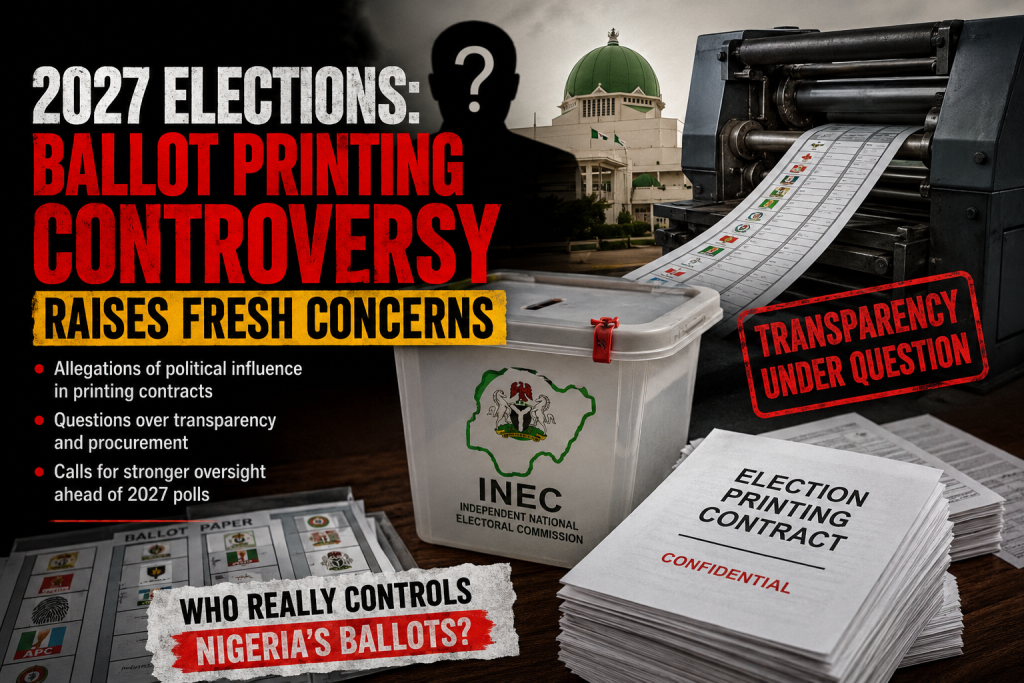


Fresh concerns are emerging over Nigeria’s electoral process ahead of the 2027 general elections following the circulation of an explosive investigative publication alleging possible political influence in the awarding of ballot printing contracts.
The publication, titled “The Bloody Ballot: Political Cartel,” has sparked intense discussions online after raising questions about transparency, accountability, and oversight in the handling of sensitive election materials.
Although the allegations contained in the document remain unproven and have not been confirmed by any official investigation or court ruling, the report is fueling broader public concern about how election contracts are awarded and monitored in Nigeria.
At the centre of the debate is a crucial democratic issue: can Nigerians fully trust the systems responsible for producing the ballots that determine leadership outcomes?
Election experts say ballot paper production remains one of the most delicate components of any electoral process because of its direct connection to voting integrity and public confidence.
Historically, portions of Nigeria’s election materials were printed abroad to reduce the possibility of domestic political interference. However, recent elections have seen increasing reliance on local printing firms, a move supporters say helps strengthen indigenous businesses and reduce operational costs.
But critics warn that local production without strong independent oversight could expose the process to undue influence from politically connected interests.
The controversial publication alleges that certain companies with alleged political ties may be strategically positioned to benefit from future electoral printing contracts.
Among the issues highlighted in the report are concerns over procurement transparency, questions surrounding the qualifications of some firms reportedly linked to the process, and fears about accountability in the management of highly sensitive electoral materials.
Political observers say whether the allegations are eventually substantiated or dismissed, the conversation itself reflects growing public demand for electoral transparency ahead of 2027.
Civil society organisations and governance advocates are now calling for stronger oversight mechanisms, independent monitoring of election-related contracts, and full public disclosure of firms handling critical electoral responsibilities.
For many Nigerians, the issue goes beyond politics. Analysts warn that once confidence in electoral systems begins to weaken, public trust in democracy itself can come under pressure.
With political activities expected to intensify in the coming months, attention may increasingly shift not only to candidates and parties, but also to the credibility of the institutions and processes operating behind the scenes.
Source: Original Discussion on Nairaland